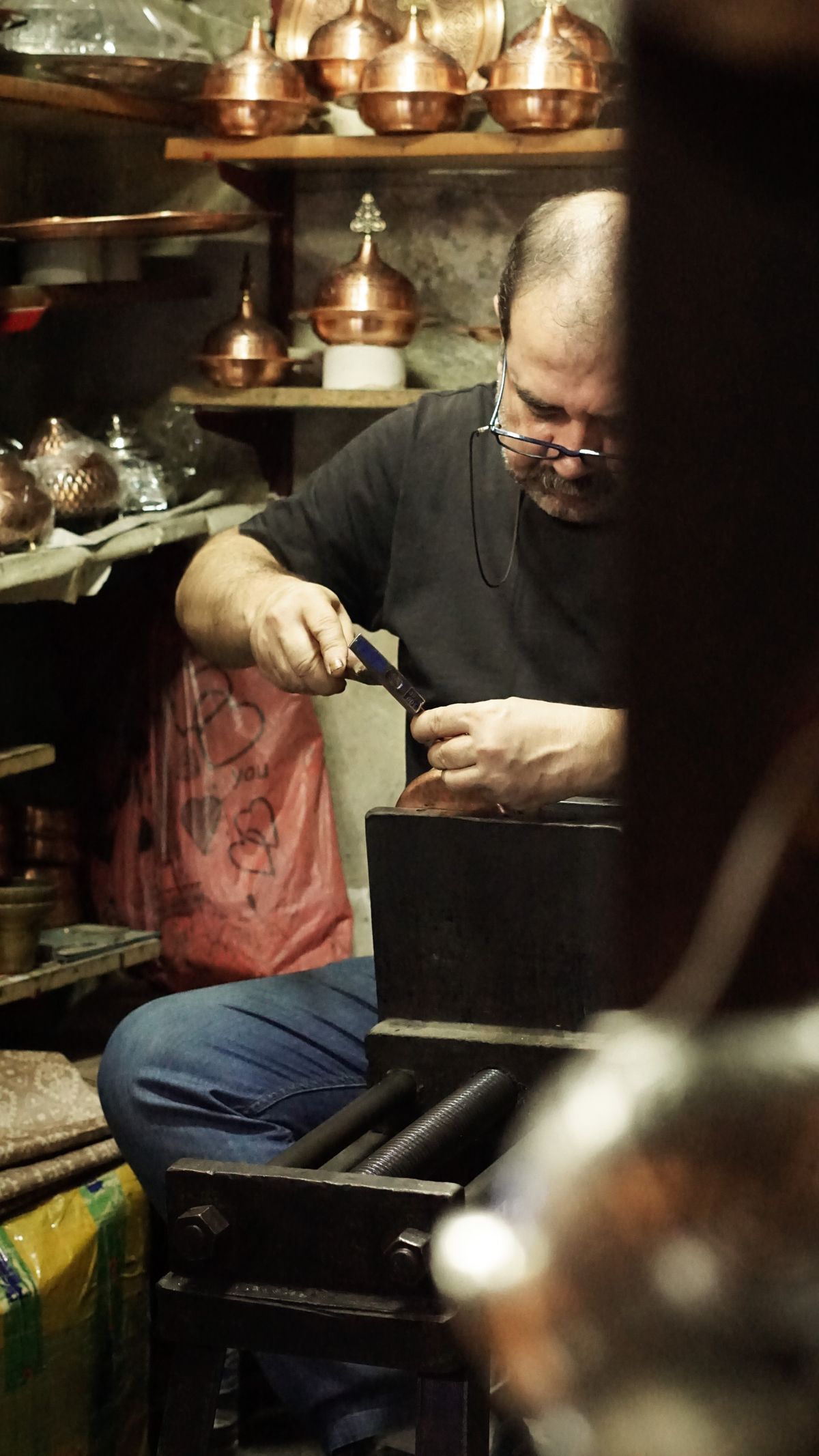
Why Everyone’s Missing the Obvious Career Path
If you are a South African school-leaver or someone in your twenties staring at a job market that feels impossible, you have probably been told the same thing a thousand times: get a degree, build your CV, apply online, wait.
Here is what nobody is telling you: there is a career path in South Africa that pays you while you learn, leads to a qualification recognised worldwide, and has employers actively scouting for people. It is not a side hustle. It is not a coding bootcamp. It is the trades.
South Africa has a critical shortage of qualified artisans. The Department of Higher Education and Training has been pushing the artisan development programme for years, setting targets of 30,000 new artisans per year because demand is that high. Electricians, plumbers, welders, fitters and turners, diesel mechanics, bricklayers. These are not backup options for people who could not get into university. They are some of the most financially secure careers you can build in this country.
The Real Numbers: What Artisans Actually Earn
Let us talk about money, because the silence around skilled-trade earnings in South Africa is deafening.
A newly qualified electrician in South Africa can earn between R15,000 and R25,000 per month. A qualified plumber with five years of experience earns R20,000 to R35,000. Diesel mechanics working in mining or logistics earn R25,000 to R45,000. Welders working on construction or pipeline projects can earn R30,000 to R50,000, especially if they have specialised certifications.
Now compare that to the average starting salary for a university graduate. According to recent data, most graduates with a three-year degree start between R8,000 and R15,000 per month. Some sectors higher, many lower.
But here is the part that actually matters: artisans who go independent, and many of them do within five to seven years, earn significantly more. A self-employed plumber or electrician with a good reputation and a bakkie can earn R40,000 to R80,000 per month. We are talking about people in their early thirties with no student debt and a business that works.
How to Qualify: The Artisan Pathway
Becoming a qualified artisan in South Africa follows a clear, structured path. It is not complicated, but it does require commitment.
Step 1: Get your N1-N3 certificate. After Grade 9, you can enrol at a Technical and Vocational Education and Training (TVET) college for a National Certificate (Vocational) in your chosen trade. After matric, you can go straight to N4 if your subjects qualify. This is the theoretical foundation.
Step 2: Secure an apprenticeship or learnership. This is where you start earning. Apprenticeships run through employers registered with the relevant Sector Education and Training Authority (SETA). You learn on the job under a qualified artisan while completing your N4-N6 certificates. A learnership includes a stipend, typically R1,500 to R4,000 per month. It is modest, but it is income while you qualify, which is more than most university students can say.
Step 3: Complete your trade test. After finishing your theoretical certificates and your workplace practical (usually 18-24 months), you sit a trade test at an accredited trade test centre. Pass it, and you are a qualified artisan with a Red Seal qualification, recognised internationally including in countries like Australia, Canada, and the UK.
The entire process typically takes three to four years, the same as a degree. But unlike a degree, you have been earning money the whole time.
The Red Seal: South Africa’s Most Underrated Qualification
The Red Seal is the official certificate of competence issued to qualified artisans in South Africa. It is regulated under the National Artisan Development programme and backed by the Quality Council for Trades and Occupations (QCTO).
What makes it powerful is its international recognition. A South African Red Seal welder can work in Australia. A South African Red Seal electrician can work in Canada. The qualification is benchmarked against international standards, and skilled trades are in global shortage.
If you are a young person thinking about emigration options, a Red Seal qualification stands alongside a university degree on most skilled-worker visa checklists. In some countries, trades are prioritised above general degrees.
The Trades That Need People Most in 2026
Not all trades are equal, and if you are choosing a path, you should choose with demand in mind. Based on current and projected shortages in South Africa:
Electricians. Every new housing development, solar installation, and commercial build needs electrical work. The shift to renewable energy has created a surge in demand for electricians with solar and inverter experience.
Plumbers. South Africa’s water infrastructure is under enormous pressure, and every new build needs plumbing. Plumbers are also among the fastest trades to go independent because demand is consistent.
Welders. Mining, construction, manufacturing, and pipeline projects all depend on welders. specialised welding (pipe welding, underwater welding) commands premium rates and international mobility.
Diesel mechanics. The logistics and mining sectors run on heavy machinery. Diesel mechanics are in acute shortage, and the role pays at the top of the artisan scale.
Millwrights. A hybrid of electrical and mechanical, millwrights are the problem-solvers on factory floors. They are rare, which means they are valuable.
How to Get Started Right Now
If this path sounds right for you or someone you know, here is what to do this month:
If you are still in school: Make sure you take Mathematics and Physical Sciences or Technical Sciences. These open the most doors. Visit your local TVET college and ask about NCV programmes in your trade of interest.
If you have matric: Go to the National Youth Development Agency (NYDA) website or your local NYDA office. They can help you find apprenticeship and learnership opportunities. Register on the SETA database for your chosen sector (ESETA for electrical, MICT SETA for IT, CETA for construction, merSETA for manufacturing).
If you are already working in a trade without formal qualification: You may qualify for Recognition of Prior Learning (RPL). This allows your existing experience to count towards the trade test. Contact your nearest TVET college or trade test centre to start the process.
If cost is the barrier: NSFAS provides financial aid for TVET college programmes, not just university. Bursaries for artisan training are also available through SETAs and the National Skills Fund. The funding exists. The problem is that people do not know to ask.
The Honest Truth
The trades are not an easy path. You will work with your hands in conditions that are physically demanding. You will start on low stipends. You will spend months learning before the money reflects. If you are looking for a quick fix, this is not it.
But if you are willing to spend three to four years learning a skill that is in global demand, that lets you earn while you qualify, and that can lead to your own business within a decade, then the artisan route is one of the most solid career moves available in South Africa today.
While thousands of graduates compete for the same entry-level positions with the same degrees, a qualified plumber is on a roof somewhere earning R2,000 for a call-out that took two hours. That is not a fallback. That is a strategy.
The question is not whether you are smart enough for university. The question is whether you are smart enough to look at where the actual demand is, and go there.
Views: 3

The SA Career Guide editorial team provides practical, no-nonsense career advice for South African job seekers, students, and professionals. We break down complex career decisions into actionable steps that actually work in the local job market.